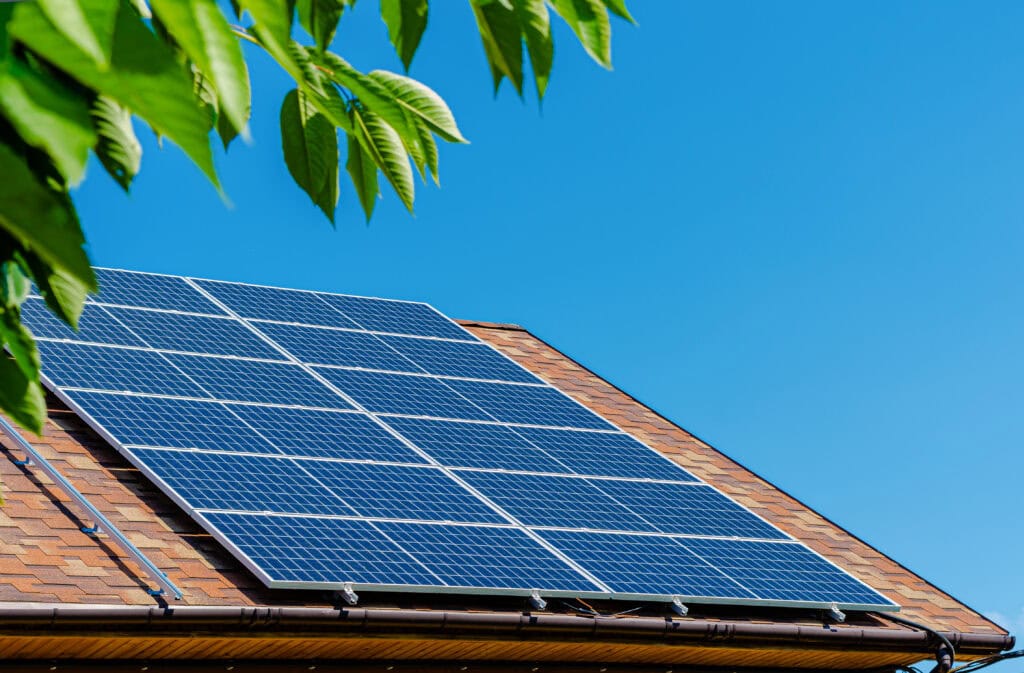
As energy prices continue to fluctuate and electric vehicles become increasingly common, incorporating renewable energy technology into new homes is no longer just an environmental choice – it makes financial sense too.
At Blackrock Architecture, we regularly advise clients on integrating solar photovoltaic (PV) panels, battery storage and electric vehicle (EV) charging into new developments. These technologies are now a familiar part of the planning and Building Regulations process, but perhaps more importantly, they can make a genuine difference to day-to-day living.
What makes this particularly exciting for us is that we don’t just specify these systems for clients – we’ve invested in them ourselves.
Our own home is fitted with solar panels, battery storage and EV charging, and the results have genuinely exceeded expectations.
In the last month alone we have:
- Powered a large five-bedroom family home.
- Charged and run two electric vehicles.
- Paid absolutely nothing for imported electricity.
- Generated enough excess energy to receive around £50 back through electricity exports to the grid.
For us, that demonstrates exactly what these systems are capable of when they are designed and used effectively.
How the technology works
Solar panels generate electricity during daylight hours. Any electricity used immediately powers your home, reducing the amount you need to purchase from the grid.
When production exceeds demand, the surplus can be stored in a battery rather than being wasted. The battery can then power your home during the evening, overnight or on duller days when the panels are producing less energy.
Many electricity suppliers also offer lower overnight tariffs. Batteries can be programmed to charge during these cheaper periods, allowing homeowners to use low-cost electricity when solar generation is limited.
If the battery becomes full and your home isn’t using all of the electricity being generated, the excess can be exported back to the National Grid, with many suppliers paying homeowners for the energy they provide.
Adding an EV charger completes the system. Instead of paying to fuel a vehicle with petrol or diesel, your car can often be charged using your own solar generation or inexpensive overnight electricity.
A requirement for many new homes
As Building Regulations continue to evolve, low-carbon technology has become an essential part of residential design.
Nearly all new homes now require measures to reduce carbon emissions, with solar panels becoming commonplace on new developments. In addition, most new dwellings are also required to be provided with electric vehicle charging infrastructure, helping to future-proof homes as electric vehicle ownership continues to grow.
Rather than viewing these requirements as another regulatory hurdle, we see them as an opportunity to create homes that are cheaper to run, more sustainable and more attractive to future buyers.
Is it worth the investment?
Every property is different, and the financial return will depend on factors such as roof orientation, electricity usage and the size of the installation.
However, for households with higher electricity demand – particularly those with electric vehicles – the savings can be substantial.
While the initial installation cost can seem significant, many homeowners find that reduced energy bills, export payments and lower vehicle running costs provide an excellent long-term return.
More importantly, homeowners gain a degree of protection from future increases in electricity prices.
Designing it properly
The best results come when these technologies are considered from the very beginning of a project.
Panel orientation, roof design, battery location, inverter positions, cable routes and EV charger locations can all be incorporated into the design process, often reducing installation costs and improving the overall appearance of the finished home.
At Blackrock Architecture, we work with clients from the earliest design stages to ensure these technologies are integrated seamlessly into their project while satisfying current Building Regulations.
Looking ahead
Renewable technology is no longer a niche option. It is becoming the standard for modern housing.
Having experienced the benefits first-hand, we’re convinced that solar panels, battery storage and EV charging are among the best investments homeowners can make. They reduce running costs, lower carbon emissions and help future-proof a property for years to come.
If you’re planning a new home, extension or residential development and would like to discuss incorporating renewable energy technology into your project, we’d be delighted to help.